Tronxy X5SA-400 2E Reviews: See Why 0 Shoppers Rated It 0 Stars!
Before trusting the stars, check what 0 gadget users said about the Tronxy X5SA-400 2E 3d printer. That 0/5 might not tell the full story.
 Supermod
 Moderator
 Recaptor
Tronxy X5SA-400 2E Review: A Versatile 3D Printer with Large Build Volume
In the ever-evolving world of 3D printing, finding a machine that effectively balances build volume, dual extrusion capabilities, and user upgrade potential is a challenging feat. The Tronxy X5SA-400 2E is built precisely for intermediate users aiming to prototype with a large-format FDM/FFF setup. On paper, it offers a generous build space of 15.75 inches in every dimension, dual extruders for multi-material projects, and a 1-year warranty that reflects some confidence in its manufacturing quality. But does this kit-assembly 3D printer live up to these numbers in practical terms?
Detailed Specs & Features
The Tronxy X5SA-400 2E arrives as a kit-style printer, requiring assembly, which might be appealing for users who enjoy hands-on configurations. Manufactured in China and released in 2020, this FDM/FFF printer supports hard-to-ignore specs such as a maximum extruder temperature of 572°F, allowing it to handle a variety of filaments like PLA, ABS, PETG, and TPU with 1.75mm diameter compatibility. The twin extruders are dual but not independent, meaning they can't print two completely separate objects simultaneously, but can do multi-material prints with up to two different filaments.
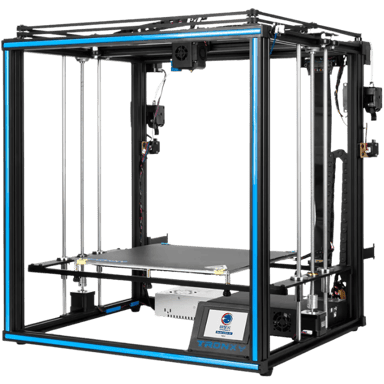
Its physical footprint spans approximately 23.6 by 24.2 by 25.8 inches (WxDxH) and weighs about 26.5 pounds, weighing enough to give it a sturdy base but still manageable for desktop use. According to specs, its printing volume is an impressive 3892 cubic inches, translating into a 15.75-inch cube, ideal for sizable models or prototypes. The machine also emphasizes print precision with a layer resolution range from 100 to 400 microns and a standard nozzle diameter of 0.4mm, while also providing various optional sizes for different printing detail requirements.
From a power perspective, it operates on an external supply spanning 110-220 volts, consuming roughly 360 watts during operation, which is substantial but reasonable for such a large heated platform and dual extruder system. The package includes features like auto bed leveling, filament runout sensor, and power loss recovery, which are crucial for minimizing failed prints and enhancing long-term usability.
User Experience & Performance (Based on Specs)
Design & Build
The printer sports a CoreXY frame system, which is known for its speedy and accurate XY-axis movement, lending smoother motion and potentially faster print times. The open enclosure design means users should be mindful of ambient temperature and drafts, since the printer does not have a heated chamber. However, this openness also makes maintenance and adjustments easier.
The build plate is a mix of glass and magnetic surfaces with a textured finish, beneficial for adhesion and part removal, further supported by the inclusion of PEI print adhesion material for the first layer, which enhances print stability. At 3.5 inches, the touchscreen interface is relatively small but responsive and has a standard resolution (480x272p), enough for clear navigation through print settings and real-time monitoring.
Performance
Measured effective print speeds clock in around 60 mm/s versus the official max of 100 mm/s, which is typical of printers balancing quality and speed. The first layer calibration is automatic, reducing setup time for prints, and the inclusion of print recovery and filament runout sensors offers reliability, boosting confidence in longer prints. The print accuracy rated at 100 microns promises well-detailed output, especially for an intermediate consumer-level printer.
On the flip side, it lacks advanced features such as spaghetti/fault detection, vibration compensation, or multi-material independent extruders, which might limit complex project workflows. Noise levels peak at 55 decibels during operation, a moderate buzz that is quiet enough for a home workshop but not for noise-sensitive spaces. The official print quality rating of 'Good' aligns with the specifications and intended user profile.
Hardware Features
Its dual extruder system, although not independent, employs a direct drive extruder type, which is generally better for flexible filaments. The hotend is replaceable but lacks quick-swap nozzles, requiring more traditional maintenance skills. Safety-wise, it holds a CE certification, supported by two safety sensors, overheat protection, and automatic shutdown on error, providing essential peace of mind when running extended prints.
Although it does not include advanced air filtration or an enclosed chamber lock, the printer is engineered for intermediate users who are expected to monitor prints and maintain a controlled environment manually. The cooling fans help maintain optimal print head temperature, vital for consistent extrusion performance.
Extra Features
Connectivity options are basic yet sufficient, allowing file transfers via USB or TF card. There's no remote monitoring or cloud integration, which might disappoint users seeking sophisticated fleet management, but firmware updates are supported, ensuring ongoing software improvements and bug fixes.
It doesn't accommodate resin workflows or advanced post-processing automation, but remains compatible with post-processing equipment, making it a more solid choice for filament users over resin printers. The upgrade path is promising, with options to add enclosures or laser modules, providing scalability over its lifecycle.
Pros & Cons
Pros
- Large Build Volume of 15.75 inches cubed
- Dual Extruder Setup Supporting Multi-Material Printing
- Auto Bed Leveling and Power Loss Recovery for Print Reliability
- Support for Various Filament Materials, Including Flexible TPU
Cons
- No Enclosure or Heated Chamber Limits Temperature-Controlled Printing
- Lack of Advanced Sensors, Like Spaghetti Detection and Vibration Compensation
- Smaller Touchscreen Size and No Remote Monitoring Capabilities
- Kit Assembly Required, Potentially Steeper Learning Curve for Beginners
Price & Value For Money
Priced at $484.99 at Tronxy3DPrinter.com, the X5SA-400 2E stands out for its feature set in a sub-$500 category. Given its 1 Year Warranty Period and robust power specs, including a flexible Power Supply Voltage, the pricing feels justified for hobbyists and intermediate users seeking big build sizes without investing thousands. It fills a niche where large-scale printing meets multi-material capability without the complexity and cost of professional-grade machines.
That said, the cost-benefit might be less attractive for beginners or those requiring plug-and-play simplicity and advanced automation features. Also, users who need quiet or highly controlled printing environments may find the open frame and noise level constraints a deterrent. However, for budget-conscious users willing to tinker, this printer offers significant bang for the buck.
Quick Take
In short, the Tronxy X5SA-400 2E delivers a compelling package for intermediate users craving a large dual extrusion 3D printer with solid core specifications. Its large print volume, multi-material support, and essential safety features stand out against competitors in the consumer 3D printer segment. While some advanced sensors and enclosures are missing, the overall profile suggests a machine designed to empower hands-on users targeting prototyping and functional prints within a reasonable budget.
Closing Recommendation
The Tronxy X5SA-400 2E may be ideal for hobbyists and small-scale professionals willing to invest time into assembly and calibration to unlock its potential. It appears to perform best for intermediate users who value print size and multi-filament versatility over turnkey convenience or extensive automation. Those seeking advanced remote monitoring or ultra-quiet operation might want to explore other options. Ultimately, this printer helps users achieve large, multi-material prints reliably, provided they maintain a hands-on approach.
Verdict
Rating: Based on the specifications and overall feature set, we believe the Tronxy X5SA-400 2E deserves 4.2 out of 5.
- Winner Feature => Large build volume combined with dual extruder capabilities provides great versatility.
- Needs Improvement => Missing enclosure and advanced sensors limit high-precision and temperature-sensitive printing.
Reviews 0
The good, the bad, and the brutally honest.Average Rating


More 3D Printers 453
Unlock more awesome finds.